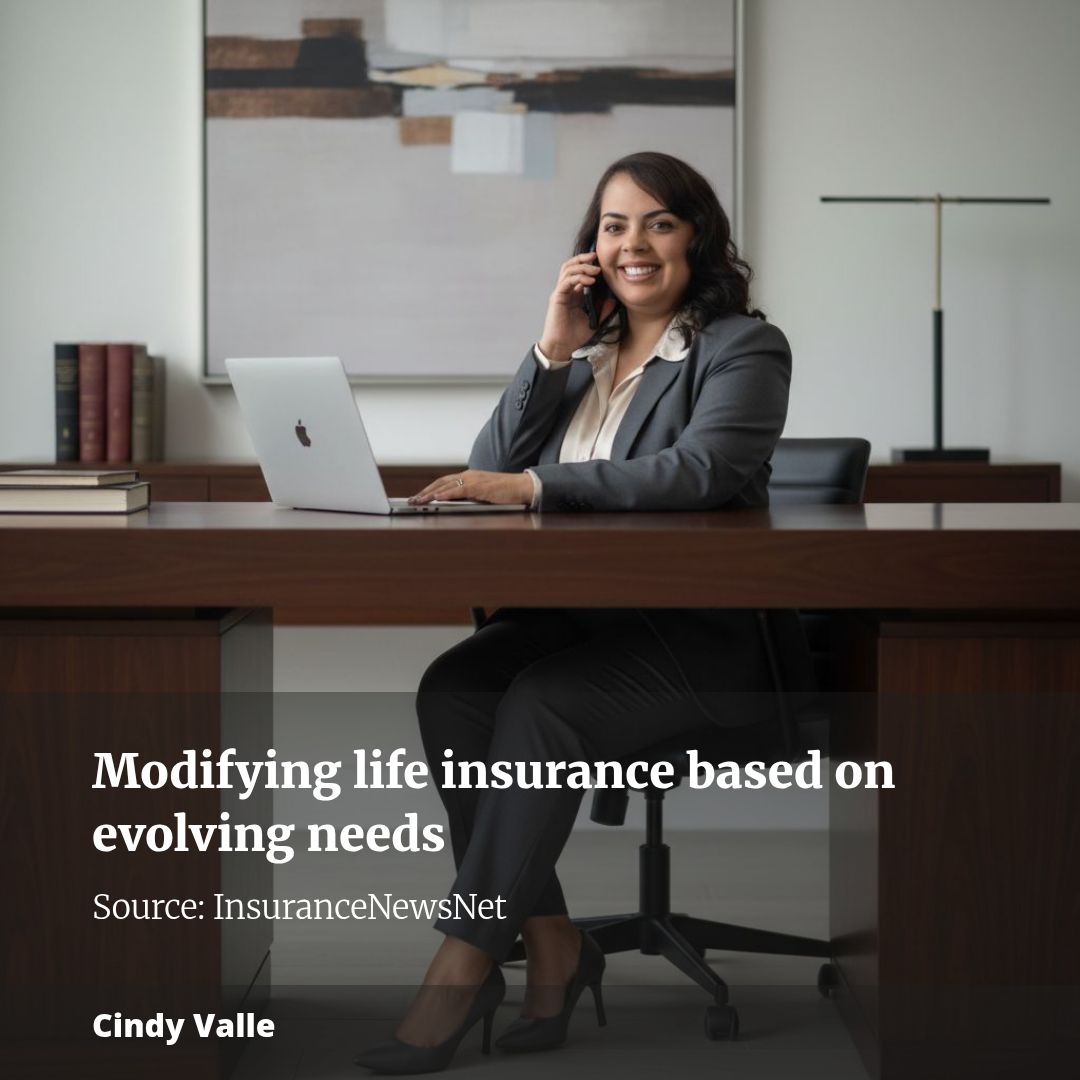
Regular financial plan reviews help match life insurance to changing needs by revisiting three core areas: income, expenses, and savings before updating coverage.
A shift in income is a clear signal for reevaluation, since higher earnings can mean more coverage is needed to replace family income.
Growing families can bring new costs, including education and daily needs, while some clients may still support adult children who are not financially independent.
A protection-first review checks whether coverage still supports expenses; if income and savings capacity grow, part of term coverage may convert into permanent insurance.
The goal is keeping life insurance aligned with a client’s financial plan, so policy choices reflect evolving needs instead of driving planning decisions.
Author: Cindy Valle
-
Life Insurance Should Evolve With Your Needs
-
Life Insurance Needs Lasting Trust
A current US study found overall individual life insurance satisfaction stayed steady, but trust weakened most among Gen Z and financially vulnerable customers.
Providers offering seamless contact across advisors, agents, mobile apps and websites earned the strongest trust, satisfaction and advocacy, while no interaction produced the weakest trust.
One negative experience, including trouble reaching a representative, an unexpected fee change or reduced support, cut overall trust satisfaction by 96 points.
Direct-to-consumer plans from call centers, websites, banks or third-party sites saw satisfaction ↓12 points, while policies sold through professionals saw satisfaction ↑6 points.
The market is shifting from one-time transactions to long-term relationships, with younger customers expecting personalized communication and consistent service across every channel. -
What Experienced Life Insurance Agents Know About Success
After years at the bedside as a nurse, I’ve learned that true support begins with listening—whether it’s for a patient or a family planning their future. In my work as a life insurance agent, this perspective shapes everything I do. Success, I’ve found, comes from building genuine trust by truly understanding what matters most to each client. That means taking the time to listen, offering solutions tailored to individual needs, and staying current with industry changes and technology. Above all, I approach every conversation with empathy and a client-first mindset—qualities that make a sustainable, meaningful career in life insurance possible. My goal is always to help you protect your loved ones and make financial decisions with confidence and peace of mind.
Continue to full article -
Why Annuities Complement Other Insurance Lines
Throughout my years as a nurse and now as a life insurance agent, I’ve seen firsthand how vital it is to build lasting security for families—especially when it comes to planning for life’s uncertainties. Annuities offer a steady stream of income for life, directly addressing the worry so many people have about outliving their savings. When combined with life insurance and other protection strategies, annuities become part of a truly personalized financial plan—one that strengthens your safety net and supports your long-term goals. My approach is always rooted in understanding what matters most to you, and I believe that integrating these solutions is one of the most effective ways to care for both your present and your future.
Continue to full article -
US Retirees Revisit Spend-It-All Strategy
As someone who’s supported families both in healthcare settings and in their financial journeys, I often see how our approach to spending in retirement reflects our deepest values. The idea of a 'spend-it-all' retirement can be tempting, especially when meaningful experiences and giving bring lasting emotional rewards—yet, planning remains essential. A recent survey revealed that about half of Americans don’t have a written financial plan, highlighting how important it is to approach these decisions with intention. Many retirees already withdraw less than the traditional 4% guideline, and some even preserve their full nest egg well into their later years. Choosing to spend or gift earlier may affect tax efficiency, as larger withdrawals could mean higher taxes, and heirs might miss out on a valuable step-up in basis. One thoughtful solution I share with families: consider permanent life insurance early on. It can offer the flexibility to enjoy your retirement today—knowing you can leave a tax-free benefit for loved ones tomorrow, and even access the policy’s value if needed. My goal is always to help you find that balance between living fully and protecting your family’s future, blending care and financial clarity every step of the way.
-
Protecting Family Wealth Beyond Estate Taxes
As someone who’s spent years at the bedside and now helps families protect their futures, I know that true peace of mind goes well beyond just covering estate taxes. Even when estate tax risk isn’t front and center, thoughtful planning remains essential—especially when it comes to avoiding probate, safeguarding assets, and ensuring that wealth transfers smoothly from one generation to the next. Trusts aren’t just for large, taxable estates; they can be powerful tools for shielding loved ones, protecting surviving spouses, limiting disputes, and preparing heirs for the realities of future tax changes.
It’s also important to remember that income tax can affect trusts in significant ways: come 2026, complex trusts will face nearly 37% ordinary income tax on income above $16,000, which could create unexpected pressure on family inheritances. Portability rules can help preserve a spouse’s exemption, but coordinated strategies—like marital trusts and proper asset titling—go a long way in safeguarding both spouse and legacy.
From my experience, the best approach is a flexible, evolving plan that involves the next generation and adapts as family needs and tax laws shift. Empowering families with clarity and protection is what drives me—because true security is about more than numbers on a page; it’s about caring for the people behind them.
-
Medicare Advantage Premiums Fall 16% in 2027
When it comes to looking after your health—and your wallet—every bit of good news counts. Federal estimates show that Medicare Advantage premiums are projected to drop by 16% in 2027, with bundled drug coverage costs expected to fall by about 40%. That means the average monthly premium for these private plans could be just $12, down from over $14, while extra benefits remain steady. Nationwide, plan options for 2027 will be about the same, so you’ll have plenty to consider when Open Enrollment runs from October 15 to December 7. Officials recommend using this window to carefully review your coverage, compare choices, and select a plan that fits your health needs and budget. If you’re looking at stand-alone drug coverage, average premiums are expected to hold steady, and most people can still access enhanced options for less than $6 a month. My background in both nursing and life insurance has taught me how important it is to make choices that support both your well-being and your financial security. As always, I’m here to help you feel informed and empowered about your options.
-
Modifying life insurance based on evolving needs
When it comes to life insurance, one size rarely fits all—especially as life itself keeps changing. In both nursing and financial protection, I’ve learned how important it is to reassess needs regularly. That’s why I encourage a thoughtful review of your life insurance as your circumstances evolve. By taking a close look at your income, expenses, and savings, you can ensure your coverage stays in step with your goals and responsibilities. Sometimes this means adjusting your policy, or even converting a term plan to a permanent one to gain both cash value and lasting security. My approach is always rooted in empathy and clarity, drawing on my experience supporting people through pivotal moments. The goal is simple: to help you make informed, confident choices that safeguard what matters most.
Continue to full article -
What Career Growth Looks Like in Disability Insurance
Having walked alongside people during some of their most challenging times—both as a nurse and as a life insurance agent—I’ve seen firsthand how important it is to pair deep care with specialized knowledge. In disability insurance, career growth often starts with entry-level positions, and gradually leads into the nuanced work of risk assessment, policy design, and eventually leadership roles. Along this path, success is shaped by a willingness to earn industry certifications, stay technically sharp, and keep learning as regulations and technology shift. For me, the heart of this journey is using that expertise to advocate for individuals and families, ensuring they feel supported and protected as their needs evolve.
Continue to full article